

plaud_sdk plugin as a starter template for:
- Connecting to Plaud Devices
- Syncing audio files
- Transcription
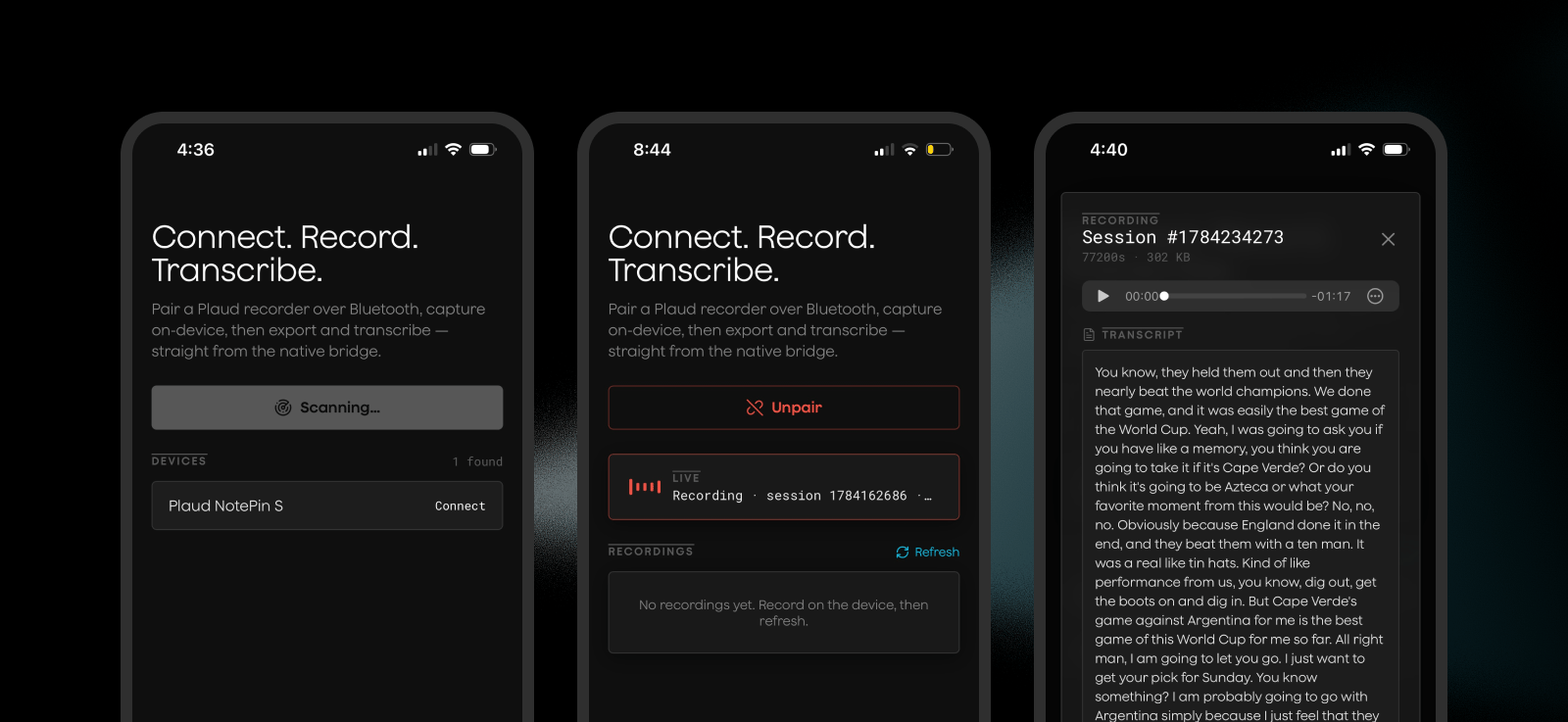
For advanced usage of the Embedded SDK methods for use cases like WiFi fast transfers, we recommend adding more methods to this plugin or using the native Embedded iOS SDK directly
How it works
Flutter uses platform channels to let your Flutter app call native platform code. A plugin packages that native code so it can be dropped into any Flutter app. Plaud Embedded’s plugin can be added as a path dependency, imported as a typed Dart library, and run as native code via the Embedded iOS SDK and Embedded Android SDK.MethodChannel for method calls and an EventChannel for event listening, passing data between the Dart layer and the native SDK.
Running the Demo App
The demo app is included in the Plaud Embedded Flutter repo as reference for implementing the plugin in your own app and seeing how it works.1
Clone the Embedded Flutter repo
2
Install dependencies and set up env vars
3
Set your signing team and run on a device
Open 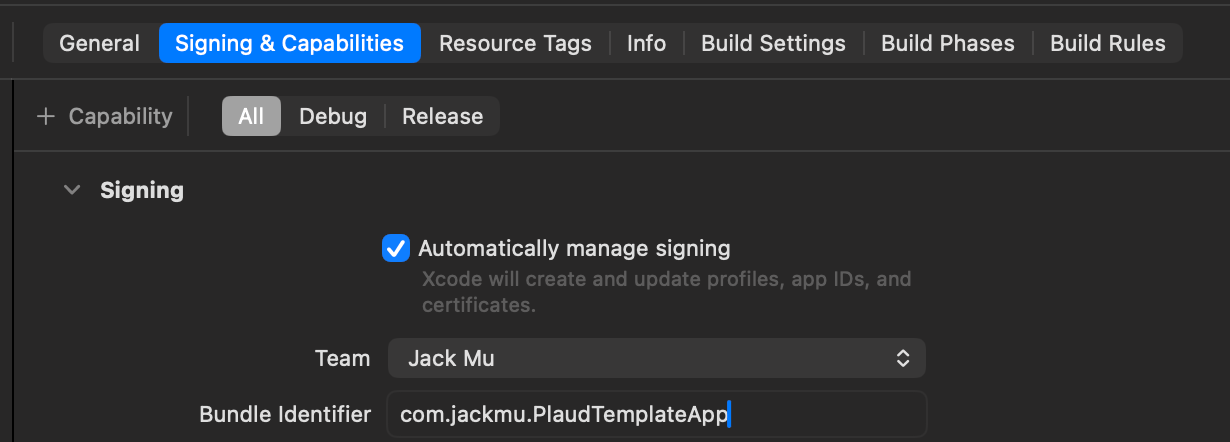
ios/Runner.xcworkspace once to set your Apple developer team (Runner → Signing & Capabilities).--dart-define-from-file=.env is required on every run.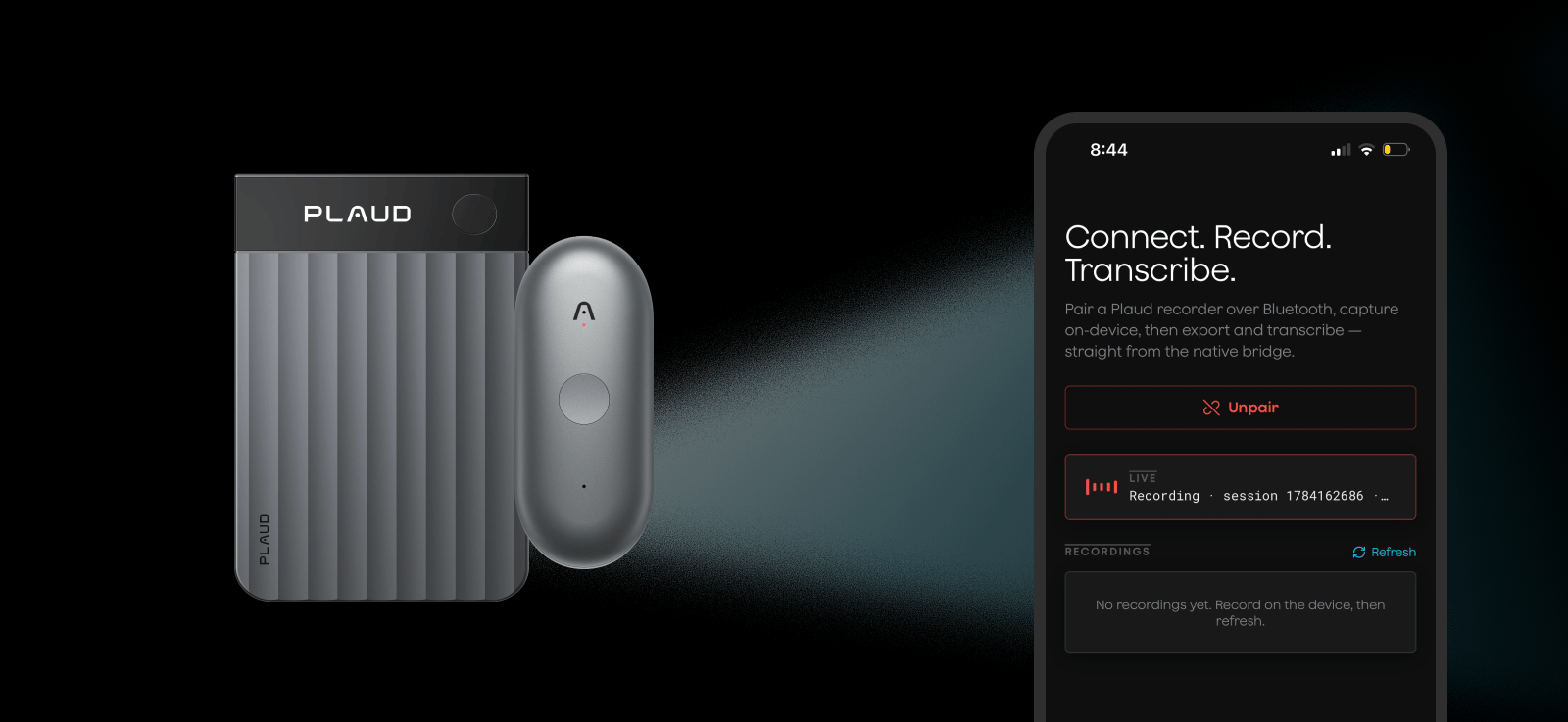
How to Integrate with your Flutter App
Prerequisites
Step 1: Clone the Plaud Embedded Flutter Repo
-
Flutter plugin (
plugins/plaud_sdk) for the Plaud iOS and Android SDK for basic functionality - Example Flutter app
- Skill for implementing the Plaud Embedded plugin within projects
Step 2: Copy the Plaud Embedded Plugin into your App
At the root of your Flutter project, copyplugins/plaud_sdk into your project’s plugins directory.
pubspec.yaml:
pubspec.yaml
Step 3: Configure Permissions
For iOS, set the deployment target to 15.1 inios/Podfile (platform :ios, '15.1') and the Runner Xcode target — the Plaud frameworks require it, don’t go lower.
Then add BLE permissions to ios/Runner/Info.plist for the Plaud SDK to leverage iOS’s native bluetooth functionality (without the first key, the app hard-crashes the moment it touches Bluetooth).
Info.plist
Step 4: Use the Plaud SDK from Flutter
You can now import theplaud_sdk library and use the Embedded iOS SDK and Embedded Android SDK straight from your Flutter project in Dart.
Step 5: Run Your App
For the full list of relevant SDK methods for interacting with Plaud devices, see our iOS SDK reference and Android SDK reference.